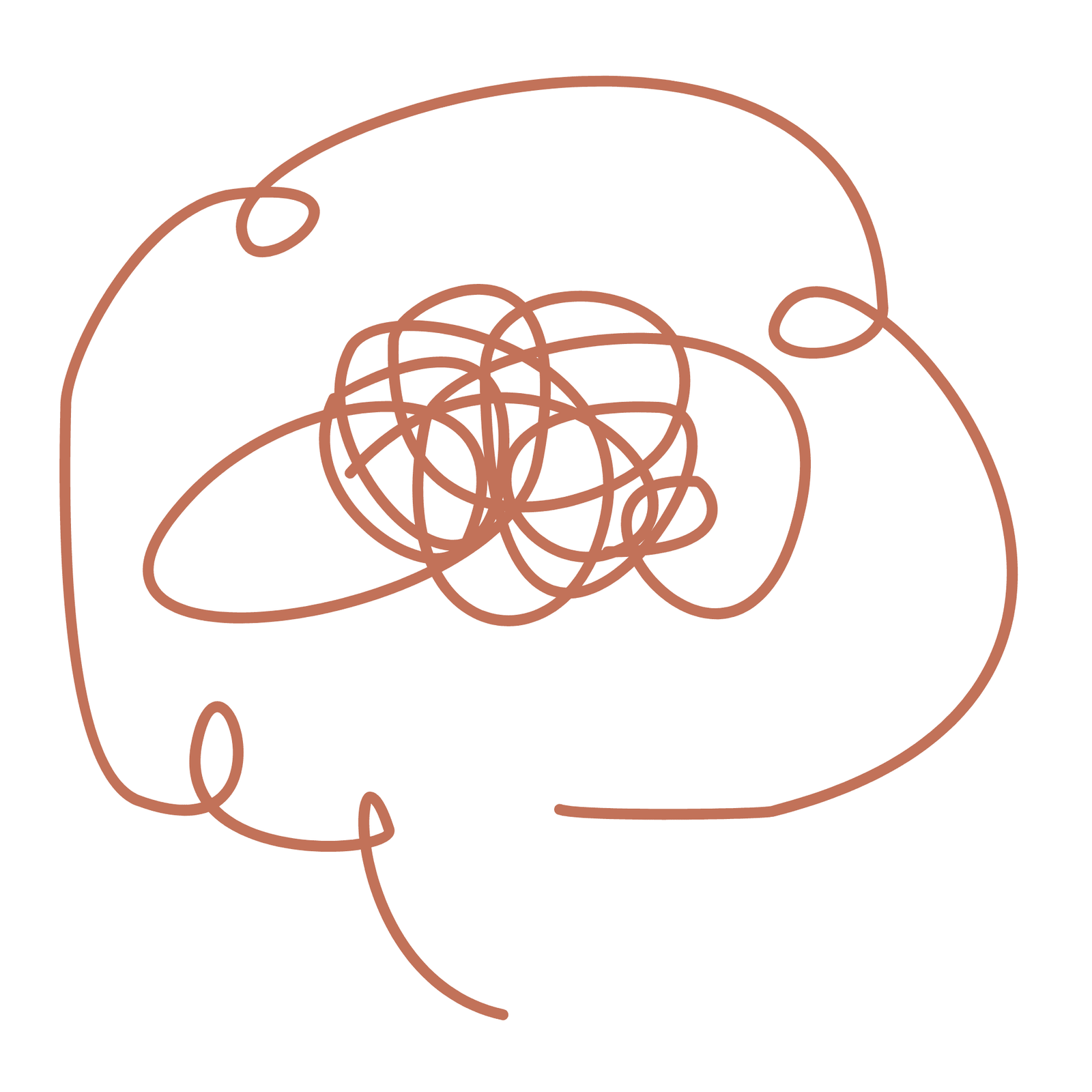

Overthinking is the habit of replaying the past or rehearsing the future in repetitive loops that do not lead to a solution. It is not a formal diagnosis, but it is closely linked to worry, which looks forward, and rumination, which looks back. Both are common features of anxiety and low mood. The good news is that overthinking is a learned mental habit, and habits can be changed. These seven strategies draw on cognitive behavioral approaches.
Why we overthink
Many people overthink because it feels useful. It can seem like preparation, problem-solving or protection against a bad surprise. In practice, repeated thinking without new information tends to increase distress rather than reduce it. Difficulty tolerating uncertainty often fuels the loop, as explained in our guide to intolerance of uncertainty.
7 strategies to stop overthinking
1. Notice and name the loop
Awareness comes first. When you catch yourself going round in circles, label it: “I am overthinking.” Naming the pattern creates a small gap between you and the thought.
2. Ask whether the problem is solvable
Separate practical worries (“I have a bill to pay”) from hypothetical ones (“What if something goes wrong someday?”). For practical problems, write down one concrete next step. For hypothetical worries, the aim is to let go rather than solve.
3. Schedule a worry window
Set aside about fifteen minutes at the same time each day to think about worries. When one appears at other times, note it briefly and postpone it. Our article on the worry time technique explains how to do this step by step.
4. Challenge the worst-case thought
Ask: What is the evidence for and against this thought? What is the most likely outcome? What would I say to a friend? This is the core of cognitive restructuring and is covered in depth in our guide to challenging catastrophic thinking.
5. Step back from the thought
Instead of arguing with a thought, practise seeing it as a mental event: “I am having the thought that I will fail.” This approach, called cognitive defusion, comes from Acceptance and Commitment Therapy. See cognitive defusion techniques for exercises.
6. Shift your attention with a concrete activity
Move your body, call someone, cook, tidy or do a task that needs focus. The goal is not to suppress thoughts, which often backfires, but to engage fully with something else while the urge to ruminate fades.
7. Build tolerance for not knowing
Practise small acts of uncertainty: decide without researching for an hour, send a message without rereading it three times, or leave a question unanswered for the day. Over time, your mind learns that you can cope without certainty.
When overthinking needs more support
If overthinking is constant, disrupts your sleep or work, or comes with persistent low mood or panic, consider talking to a doctor or therapist. Cognitive behavioral therapy has strong evidence for worry and anxiety. You can also check in with our free self-assessment or try the Anxiety Toolkit.
Frequently asked questions
Is overthinking a mental illness?
No. Overthinking is a thinking pattern, not a diagnosis, but it can be a symptom of conditions such as generalized anxiety disorder or depression.
What is the difference between worry and rumination?
Worry focuses on possible future problems, while rumination dwells on past events or on why you feel the way you do. Both are repetitive and unproductive when they loop.
How long does it take to stop overthinking?
It varies. Many people notice small improvements within a few weeks of consistent practice, but changing a long-standing habit takes time and repetition.
References and further reading
This article is educational and does not replace assessment or treatment by a qualified health professional.