
Do You Say Yes When You Really Want to Say No?
You want to say no. But then you start thinking:
What if they get upset?
What if they think I’m selfish?
What if they stop liking me?
So you say yes.
Even when you’re tired.
Even when you don’t have the time.
Even when you don’t actually want to.
And afterward, you may feel frustrated with yourself for agreeing.
If this pattern feels familiar, the problem may not be that you don’t know how to say no.
Sometimes, you’re afraid of what might happen if you do.
This worksheet helps you slow that process down.
What This Worksheet Helps You Practice
- Notice when you’re automatically agreeing
- Identify what you genuinely want
- Recognize fears behind people-pleasing
- Separate your needs from other people’s reactions
- Practice giving yourself time before answering
- Consider different ways to respond
- Make choices that respect your own limits
- Begin building healthier boundaries
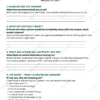
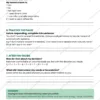
What’s Inside?
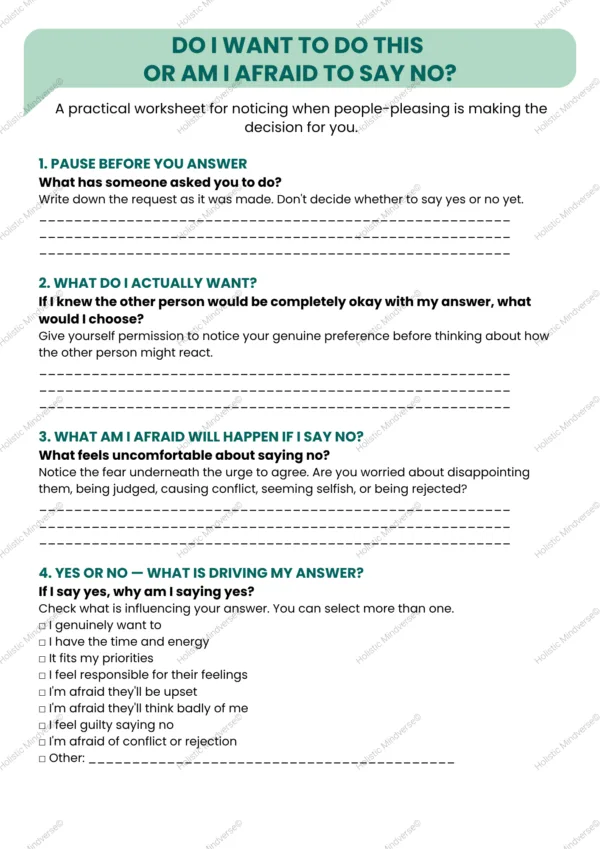
1. Pause Before You Answer
Identify the request without immediately deciding what you should do.
2. What Do I Actually Want?
Look beyond what the other person might want and identify your own preference.
3. What Am I Afraid Will Happen If I Say No?
Explore the fear underneath the urge to agree, such as disappointing someone, being judged, creating conflict, or being rejected.
4. What Is Driving My Yes?
Identify whether your response comes from genuine willingness or pressure, guilt, fear, or the desire to avoid someone’s reaction.
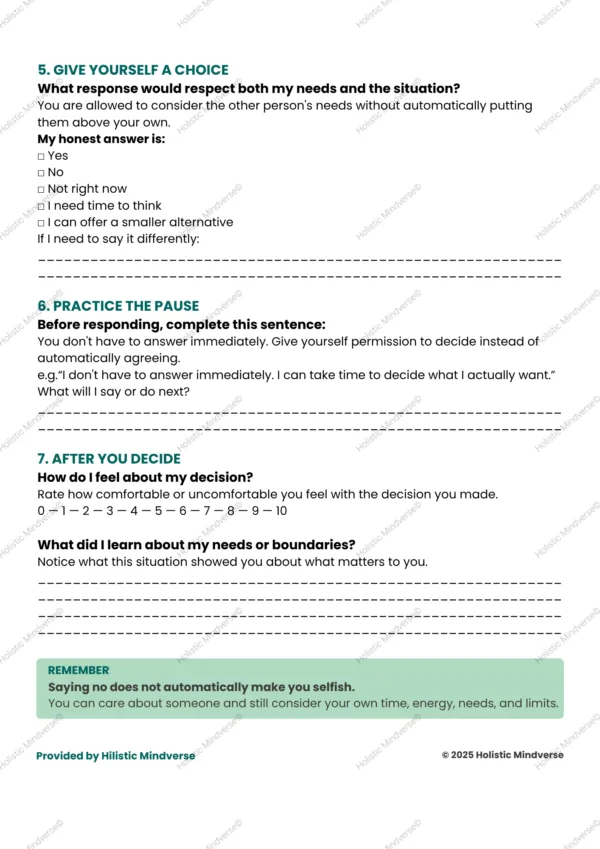
5. Give Yourself a Choice
Consider several possible responses rather than treating the situation as simply “say yes” or “say no.”
6. Practice the Pause
Create space between being asked and automatically agreeing.
The worksheet also gives you an opportunity to reflect on what you learned about your own needs and boundaries.
Who Is This Worksheet For?
This worksheet may be useful for adults who:
- Frequently say yes when they want to say no
- Feel guilty when setting boundaries
- Worry about disappointing people
- Fear being judged as selfish
- Avoid conflict at their own expense
- Feel responsible for other people’s feelings
- Have difficulty expressing their needs
- Struggle to make decisions based on what they actually want
- Often put other people’s needs before their own
- Want to become more assertive without becoming harsh or uncaring
It may be especially relevant if you often think:
“I don’t actually want to do this, but I don’t know how to say no.”
What You’ll Receive
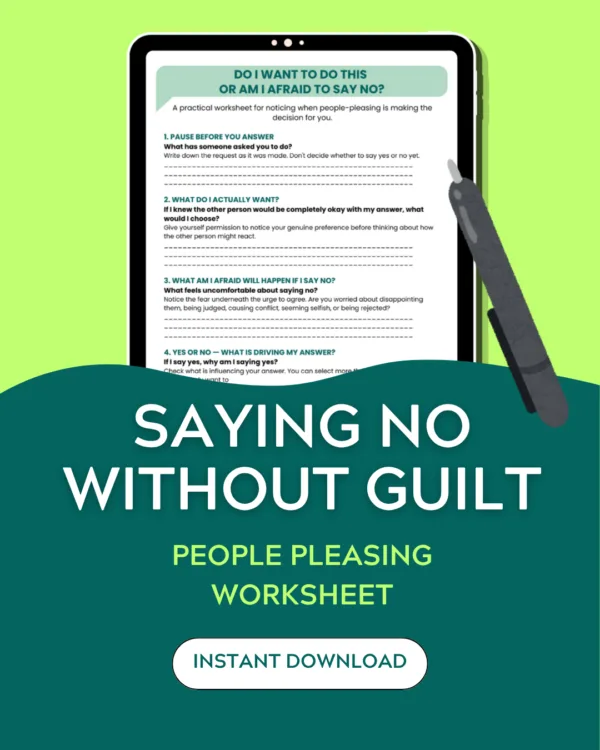
Do I Want to Do This or Am I Afraid to Say No?
2-pages digital PDF worksheet
Designed for:
- Printing at home
- Handwritten completion
- Digital annotation
- Personal reflection
- Self-help practice
- Use alongside therapy or counseling
Format: PDF
Delivery: Instant digital download
Physical product: None
Psychological Approach
Self-awareness, boundaries and assertive decision-making
The worksheet uses structured self-reflection to help you identify the situation, your genuine preference, the fears influencing your response, and the choices available to you.
This is consistent with the broader use of self-monitoring and structured behavioral exercises in CBT-oriented work with self-esteem and interpersonal difficulties.
Frequently Asked Questions
Is this a people-pleasing worksheet?
Yes. It is designed specifically for people who struggle to identify or communicate what they actually want because they are worried about disappointing, upsetting, or being rejected by others.
Is this a boundaries worksheet?
Yes. It helps you examine your own limits and practice making decisions that take your needs into account.
Do I need to know anything about psychology to use it?
No. The worksheet uses everyday language and gives you short guidance under each question so you can work through it without knowing psychological terminology.
Does this worksheet teach me how to say no?
It helps you understand why saying no feels difficult and what you actually want to say. It also gives you options for deciding how you want to respond.
Can I print the worksheet?
Yes. It is designed as a printable PDF.
Can I complete it digitally?
Yes, if your PDF software allows you to type or annotate documents.
Is this a replacement for therapy?
No. It is an educational self-help resource and does not replace individualized psychological assessment or treatment.
It can be used independently or alongside appropriate professional support.
Product Information
| Product | Details |
|---|---|
| Format | Digital PDF |
| Type | 2 pages psychological worksheet |
| Focus | People pleasing, boundaries and saying no |
| Approach | Self-reflection and assertive decision-making |
| Use | Digital or printable |
| Delivery | Instant download |
| Physical product | No |



Reviews
There are no reviews yet.